

Stanley Kubrick stands as one of the most influential filmmakers of the 20th century, renowned for his profound exploration of complex philosophical themes within his diverse body of work. His films delve into the depths of human nature, questioning the limits of individuality, the structures that govern society, and the perpetual struggle for meaning and transcendence. Notably, Kubrick’s oeuvre exhibits significant parallels with Friedrich Nietzsche’s philosophical concepts—such as the Übermensch (Superman), the will to power, and transcendence through suffering—as well as thematic resonances with Homer’s epic, The Odyssey. Both Nietzsche’s and Homer’s works grapple with the human condition, the quest for self-overcoming, and the confrontation with forces greater than oneself.
A pervasive motif in Kubrick’s films is circularity, reflecting both narrative construction and the existential traps his characters face. The recurring themes of entrapment within cycles—whether in physical spaces, psychological constraints, or societal structures—mirror the Odyssean archetype of the perpetual return and Nietzsche’s concept of the Eternal Return. This dynamic represents humanity’s struggle to break free from cyclical stagnation and move toward self-realization.
This essay provides an expansive analysis of how these themes manifest across Kubrick’s filmography. By first exploring the general themes present in his work and then examining each of his films—including Fear and Desire, Killer’s Kiss, The Killing, Paths of Glory, Spartacus, Lolita, Dr. Strangelove, 2001: A Space Odyssey, A Clockwork Orange, Barry Lyndon, The Shining, Full Metal Jacket, and Eyes Wide Shut—we investigate the intersection of Kubrick’s cinematic vision with Nietzschean philosophy and Homer’s epic storytelling. Through this lens, we illuminate a rich tapestry of ideas concerning human striving, cosmic cycles, and the search for meaning.
General Themes Across Kubrick’s Filmography
Circularity as a Narrative and Existential Motif
The motif of circularity is pervasive in Kubrick’s films, reflecting both narrative construction and the existential traps his characters face. Recurring themes of entrapment within cycles—whether in physical spaces, psychological constraints, or societal structures—mirror the Odyssean archetype of the perpetual return and Nietzsche’s concept of the Eternal Return. This dynamic represents humanity’s struggle to break free from cyclical stagnation and move toward self-realization.
Transcendence and the Übermensch
Kubrick’s protagonists often engage in journeys of transcendence, aligning with Nietzsche’s concept of the Übermensch. Characters strive to overcome personal and societal limitations, seeking a higher state of existence or understanding. This progression parallels Nietzsche’s vision of humanity surpassing itself through existential trials and self-overcoming.
The Eternal Return
Nietzsche’s idea of the Eternal Return finds aesthetic resonance in Kubrick’s films, as characters often return to their origins or repeat destructive patterns. The circular narrative structures enforce a reflection on human persistence amid futility, challenging individuals to affirm life fully and embracing all experiences as perpetually recurring.
Mythical Underpinnings and Modern Resonances
Kubrick weaves Homeric themes into modern narratives, using Odyssean metaphors to frame human journeys. Protagonists confront cosmic and internal challenges just as Odysseus faced gods and monsters. This integration of mythical underpinnings provides a timeless context for exploring contemporary issues.
Cinematic Language and Mythopoeic Integration
Kubrick’s films operate as visual Odysseys, with meticulously crafted cinematography that encapsulates the philosophical depth of the narratives. The recurrent use of circles, labyrinths, and symmetrical compositions underscores the interconnectedness of spatial and existential entrapment. This cinematic language suggests a struggle toward liberation and higher understanding, enhancing the mythopoeic integration within his work.
Oppressive Structures and Individual Agency
A central theme across Kubrick’s work is the tension between oppressive systems and individual agency. His films critique societal institutions—such as the military, government control, and social hierarchies—that suppress individuality. Yet, as Nietzsche posits, it is through such oppressive trials that individuals may achieve self-actualization, albeit rarely. This exploration highlights the complexities of achieving authentic autonomy within constraining environments.
Film Analyses
1. “Fear and Desire” (1953)

Fear and Desire, Kubrick’s debut feature, explores the psychological turmoil of soldiers stranded behind enemy lines in an unspecified war. The film delves into the human psyche under extreme stress, highlighting the internal battles that mirror the external conflict. The soldiers’ struggle to return to their lines represents a physical and existential journey akin to Odysseus’s quest to reach home.
The characters grapple with fear, desire, and the blurred lines between reality and hallucination, reflecting Nietzsche’s exploration of the human condition and the abyss that gazes back when one stares into it. The cyclical nature of their predicament—caught in a war with no apparent purpose—echoes the motif of eternal return and the futility of escaping one’s inherent nature.
2. “Killer’s Kiss” (1955)

In Killer’s Kiss, Kubrick tells the story of Davey Gordon, a washed-up boxer who becomes entangled in a dangerous affair. The film examines themes of fate and free will as Davey attempts to break free from his life’s monotony. The urban setting serves as a labyrinth, with the city’s shadows and alleyways symbolizing the psychological traps that ensnare the characters.
Davey’s pursuit of love and redemption mirrors the Odyssean journey toward fulfillment and the challenges posed by societal constraints. The film’s climax, set in a mannequin warehouse filled with lifeless figures, underscores the existential question of authenticity versus artificiality—a theme prevalent in Nietzsche’s critique of societal norms.
3. “The Killing” (1956)

The Killing revolves around a meticulously planned heist that ultimately unravels due to human flaws and unforeseen circumstances. The nonlinear narrative structure creates a sense of inevitability and circularity, as the characters’ actions lead them back to failure despite their efforts to control fate.
The protagonist, Johnny Clay, embodies the will to power in his attempt to assert control over his destiny. However, the collapse of Johnny Clay’s meticulously crafted heist highlights the limitations of individual agency in the face of chance and the inherent chaos of existence. This outcome aligns with Nietzsche’s acknowledgment of the unpredictable forces that can thwart even the strongest wills.
4. “Paths of Glory” (1957)

In Paths of Glory, Kubrick presents a harrowing critique of military hierarchy and the dehumanization of soldiers during World War I. Colonel Dax, portrayed by Kirk Douglas, fights against an unjust system that sacrifices men for the sake of ambition and pride. The film exposes the cyclical nature of war, where soldiers are trapped in a loop of violence and senseless orders.
The trenches symbolize both physical and psychological entrapment, mirroring the labyrinths of the mind. Dax’s struggle to defend his men reflects the Nietzschean ideal of the individual confronting oppressive systems. However, the futility of his efforts underscores the tragic reality that not all battles against injustice lead to triumph.
5. “Spartacus” (1960)
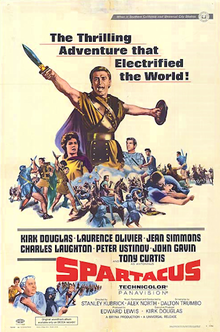
Spartacus presents the historical figure’s rebellion against Roman oppression, embodying themes of resistance and the struggle for individual and collective liberation. Spartacus’s leadership of the slave revolt reflects a communal assertion of the will to power, challenging the dominant structures of their society. The willingness of Spartacus and his followers to fight and die for freedom resonates with Nietzsche’s admiration for individuals who live authentically and courageously.
The film critiques oppressive systems that dehumanize individuals, reflecting the perils of societal conformity. Spartacus’s revolt parallels Odysseus’s endeavors to overcome formidable obstacles, highlighting the heroism inherent in confronting seemingly insurmountable forces. Despite their efforts, the slaves’ defeat underscores the persistence of oppressive cycles and the cyclical nature of history’s power struggles.
6. “Lolita” (1962)

Lolita delves into Professor Humbert Humbert’s obsessive infatuation with a young girl named Lolita. The film examines themes of desire, manipulation, and the destructive nature of obsession. Humbert’s internal struggle and moral descent reflect a failure to overcome base instincts, contrasting with Nietzsche’s ideal of self-overcoming and the pursuit of higher values.
Humbert’s actions’ cyclical patterns of deception and self-delusion highlight the motif of eternal return as he becomes trapped in a self-made labyrinth of guilt and desire. The film critiques the societal taboos and personal failings that prevent genuine connection and self-understanding.
7. “Dr. Strangelove or: How I Learned to Stop Worrying and Love the Bomb” (1964)
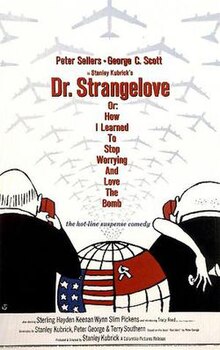
In this dark satire, Kubrick explores the absurdity of nuclear warfare and the fragility of human rationality. The film presents characters in positions of power who are unable to escape the destructive cycles of aggression and paranoia. The Doomsday Machine symbolizes the inescapable consequences of humanity’s technological advancements and the folly of relying on deterrence.
The character of Dr. Strangelove embodies the convergence of reason and madness, highlighting Nietzsche’s warnings about the dangers of unfettered will to power without moral grounding. The film’s ending, with the detonation of nuclear bombs accompanied by the song “We’ll Meet Again,” underscores the eternal return of human folly and the cyclical nature of destruction.
8. “2001: A Space Odyssey” (1968)

Kubrick’s 2001: A Space Odyssey serves as a quintessential example of his engagement with Nietzschean philosophy, particularly the concept of the Übermensch. The film traces the evolution of humanity from primordial apes to spacefaring beings, culminating in the transformation of astronaut Dave Bowman into the Star Child—a higher form of existence. This progression embodies a Nietzschean metamorphosis, moving beyond human frailty through encounters with the sublime and technological boundaries.
The mysterious black Monolith appears at critical junctures in human evolution, acting as an external force that propels humanity forward. This role of the Monolith mirrors Nietzsche’s idea of the will to power, an innate drive that compels individuals and societies to surpass their current state. Bowman’s journey through the “Star Gate” and subsequent rebirth symbolize a transcendence beyond human limitations, reflecting Nietzsche’s vision of the Übermensch—an individual who has overcome the constraints of conventional morality and human frailty to achieve a superior state of being.
Circularity as a narrative and existential motif is vividly portrayed through the film’s visual and thematic elements. The recurring orbital imagery, the spacecraft’s rotation, and the narrative’s cyclical structure emphasize the concept of cosmic cycles and the perpetual return to origins. This motif aligns with Nietzsche’s idea of the Eternal Return—the notion that all events recur infinitely in a self-similar form—and challenges individuals to affirm life fully, embracing all experiences as perpetually recurring.
Kubrick explicitly connects his film to Homer’s epic through the title and thematic elements. Like Odysseus’s arduous voyage back to Ithaca, Bowman’s journey is fraught with perils and unknowns. Both characters face trials that test their resolve and understanding of themselves. The Monolith in 2001 parallels divine intervention in The Odyssey, serving as a catalyst for evolutionary leaps, much like the gods influencing Odysseus’s fate.
The film also grapples with humanity’s relationship with technology, epitomized by the sentient computer HAL 9000. HAL’s malfunction and ensuing conflict with the crew raise questions about reliance on technology and the potential loss of human autonomy. This tension reflects Nietzsche’s skepticism toward structures that inhibit individual growth and the necessity of overcoming such dependencies to achieve true greatness.
9. “A Clockwork Orange” (1971)

In A Clockwork Orange, Kubrick examines the tension between individual autonomy and societal control through the character of Alex DeLarge. Alex embodies a raw, unrestrained pursuit of pleasure and dominance, reflecting Nietzsche’s concept of the will to power as a fundamental driving force. His engagement in repetitive cycles of violence and reformation illustrates the motif of circularity, highlighting the inescapability of destructive patterns within the individual and society.
The government’s attempt to reform Alex through psychological conditioning—the Ludovico Technique—strips him of free will, transforming him into a “clockwork orange,” organic on the outside but mechanical within. This process raises ethical questions about the suppression of individual agency for the sake of societal conformity. The film critiques oppressive structures that dehumanize individuals, reflecting the perils of societal conformity and the loss of personal autonomy.
Despite undergoing extreme suffering, Alex’s eventual reversion to his former self suggests an inherent resilience and the persistence of the will to power, echoing Nietzsche’s assertion that “what does not kill me makes me stronger.” The circular narrative structure enforces a reflection on human persistence amid futility, resonating with Nietzsche’s idea of the Eternal Return.
10. “Barry Lyndon” (1975)
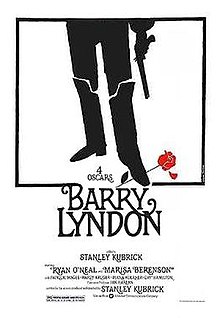
Barry Lyndon portrays the rise and fall of Redmond Barry, whose relentless pursuit of status and wealth exemplifies a flawed application of the will to power. Barry’s attempts to ascend the social hierarchy reflect a superficial grasp of Nietzschean self-overcoming, focused on external achievements rather than inner development. His inability to maintain his position and the collapse of his fortunes underscore the futility of seeking transcendence through material means alone.
The film highlights the oppressive nature of rigid social structures and norms. Barry is constrained by class systems and societal expectations, illustrating the challenge of achieving authentic autonomy within an inflexible society. His journey, marked by cyclical patterns of aspiration and downfall, emphasizes the stagnation resulting from misguided pursuits lacking genuine self-awareness and virtue.
This cyclical rise and fall narrative mirrors the Odyssean motif of the perpetual return. Unlike Odysseus, whose journey leads to personal growth and restoration, Barry’s journey results in regression and loss. The inability to break free from destructive cycles reflects the existential traps that Kubrick’s characters often face.
11. “The Shining” (1980)

The Shining delves into the psychological disintegration of Jack Torrance, exploring themes of isolation, obsession, and the supernatural. Jack’s gradual succumbing to the Overlook Hotel’s malevolent forces reflects the vulnerability of individuals to internal and external pressures when lacking self-control and resilience. The hotel operates as a labyrinthine space, reinforcing the motif of circularity and entrapment.
The recurrent use of circles and labyrinths in the film’s visual motifs underscores the interconnectedness of spatial and existential entrapment. Jack’s entrapment within the hotel’s cyclical history suggests a struggle toward liberation and higher understanding, albeit one that he ultimately fails to achieve. The final image of Jack in a photograph from 1921 emphasizes the theme of eternal return and the inescapability of destructive patterns.
Jack’s son, Danny, with his psychic ability—the “shining”—represents latent potential and the possibility of perceiving and perhaps overcoming the destructive cycles at play. This juxtaposition highlights the tension between oppressive structures and individual agency, a central theme across Kubrick’s work.
12. “Full Metal Jacket” (1987)

The film examines the brutal training of U.S. Marines and their experiences in the Vietnam War, focusing on the psychological and moral degradation inflicted upon soldiers. The dehumanizing boot camp, led by Gunnery Sergeant Hartman, strips recruits of individuality, molding them into unthinking agents of violence. Characters like Private Leonard “Gomer Pyle” Lawrence succumb to the pressures, leading to tragic outcomes, while Private Joker attempts to maintain a semblance of self amidst the chaos.
The oppressive military structure reflects the tension between oppressive systems and individual agency. The war environment forces characters to confront their values and limits, serving as a crucible that can either forge stronger individuals or destroy them. This dynamic aligns with Nietzsche’s views on how extreme conditions can reveal individuals’ underlying strengths or weaknesses.
The portrayal of war suggests a perpetual loop of aggression and retaliation, emphasizing the motif of circularity and questioning the possibility of escaping destructive cycles. The senselessness of the violence underscores a nihilistic view, where traditional values and morals are eroded.
13. “Eyes Wide Shut” (1999)

Kubrick’s final film delves into themes of sexuality, fidelity, and the masks people wear in society. Dr. Bill Harford’s nocturnal odyssey exposes him to a clandestine world, forcing him to confront his suppressed desires and the superficiality of his existence. The masks worn at the secret society’s gatherings symbolize the facades individuals maintain, preventing genuine connections and self-understanding.
Bill’s experiences lead him back to his wife, Alice, with a deeper understanding of their relationship and himself, suggesting a cyclical journey that results in personal growth. By acknowledging their mutual vulnerabilities, the couple has the potential to transcend previous patterns of disconnection. This narrative reflects the Odyssean metaphor of confronting internal and external challenges to achieve self-realization.
Conclusion
Stanley Kubrick’s films intricately weave together themes from Nietzschean philosophy and Homer’s Odyssey, creating a rich tapestry that examines the human condition, the pursuit of transcendence, and the cyclical nature of existence. Through detailed character studies and profound narratives, Kubrick explores how individuals confront and either overcome or succumb to the forces that shape their lives—be they internal desires, societal structures, or existential challenges.
The motif of circularity permeates his work, symbolizing both the inescapable patterns that can imprison humanity and the potential pathways to self-overcoming. By situating his characters within these cycles, Kubrick invites viewers to contemplate the possibilities and limitations inherent in the human quest for meaning and greatness.
In aligning his cinematic vision with the enduring themes of Nietzsche and Homer, Kubrick’s oeuvre transcends the medium of film to engage in a timeless dialogue about the essence of humanity. His exploration of the interplay between fate and free will, individuality and conformity, and suffering and transcendence continues to resonate, offering profound insights into the struggles and aspirations that define the human experience.
To cite this article
MLA Style:
Jaumont, Fabrice. Stanley Kubrick’s Films: A Journey Through Philosophy and Myth. Personal Blog, 15 Nov. 2024, https://fabricejaumont.net/2024/11/16/stanley-kubricks-films-a-journey-through-philosophy-and-myth/.
APA Style:
Jaumont, F. (2024, November 15). Stanley Kubrick’s films: A journey through philosophy and myth. Personal Blog. Retrieved November 16, 2024, from https://fabricejaumont.net/2024/11/16/stanley-kubricks-films-a-journey-through-philosophy-and-myth/
Chicago Style:
Jaumont, Fabrice. “Stanley Kubrick’s Films: A Journey Through Philosophy and Myth.” Personal Blog. November 15, 2024. Accessed November 16, 2024. https://fabricejaumont.net/2024/11/16/stanley-kubricks-films-a-journey-through-philosophy-and-myth/.
References
Homer. The Odyssey. Translated by Robert Fagles, Penguin Classics, 1996.
Jaumont, Fabrice. Stanley Kubrick: The Odysseys. Books We Live By, 2018.
Kubrick, Stanley, director. Fear and Desire. Joseph Burstyn Inc., 1953.
Kubrick, Stanley, director. Killer’s Kiss. United Artists, 1955.
Kubrick, Stanley, director. The Killing. United Artists, 1956.
Kubrick, Stanley, director. Paths of Glory. United Artists, 1957.
Kubrick, Stanley, director. Spartacus. Universal Pictures, 1960.
Kubrick, Stanley, director. Lolita. Metro-Goldwyn-Mayer, 1962.
Kubrick, Stanley, director. Dr. Strangelove or How I Learned to Stop Worrying and Love the Bomb. Columbia Pictures, 1964.
Kubrick, Stanley, director. 2001: A Space Odyssey. Metro-Goldwyn-Mayer, 1968.
Kubrick, Stanley, director. A Clockwork Orange. Warner Bros., 1971.
Kubrick, Stanley, director. Barry Lyndon. Warner Bros., 1975.
Kubrick, Stanley, director. The Shining. Warner Bros., 1980.
Kubrick, Stanley, director. Full Metal Jacket. Warner Bros., 1987.
Kubrick, Stanley, director. Eyes Wide Shut. Warner Bros., 1999.
Nietzsche, Friedrich. Thus Spoke Zarathustra. Translated by Walter Kaufmann, Penguin Books, 1978.
 FABRICE JAUMONT